The Sacred Mountains of Kumaon and Their Ancient Stories
The Kumaon Himalayas are known not only for their breathtaking landscapes but also for the ancient legends of sacred mountain peaks that have shaped the spiritual identity of Uttarakhand for centuries.
The sacred peaks of Kumaon are closely connected with local traditions, temples, folklore, mythology, and stories passed from one generation to another.
For travellers exploring Kumaon, Chaukori, and Jhaltola, these mountain peaks offer more than beautiful Himalayan views because each landscape carries a deeper cultural and spiritual significance.
The ancient history of Kumaon mountains can be experienced through local traditions, sacred sites, village stories, and the mythology associated with the Himalayan peaks.
For visitors staying at Misty Mountain Jhaltola, Chaukori, exploring these stories adds another dimension to a Kumaon mountain holiday.
Nanda Devi, The Sacred Goddess of the Himalayas
The Nanda Devi mountain is among the most revered peaks of Uttarakhand and holds an important place in the spiritual traditions of the Kumaon and Garhwal Himalayas.
The Nanda Devi peak is traditionally associated with Goddess Nanda, who is worshipped as a revered Himalayan goddess across Uttarakhand.
The Nanda Devi legends of Kumaon are deeply connected with local beliefs, festivals, temples, and traditional stories surrounding the goddess.
The Nanda Devi Raj Jat tradition is one of the most significant cultural expressions associated with Goddess Nanda and reflects the deep relationship between Himalayan communities and their sacred landscape.
The Nanda Devi mythology makes the mountain more than a geographical landmark because the peak represents faith, devotion, protection, and cultural heritage.
For travellers exploring Kumaon tourism, learning about Nanda Devi provides an opportunity to understand how Himalayan mountains are connected with local spirituality.
Panchachuli Peaks and the Legend of the Pandavas
The Panchachuli peaks of Kumaon are among the most distinctive mountain landscapes in Uttarakhand and are surrounded by powerful legends from Indian mythology.
The name Panchachuli is traditionally associated with the five Pandava brothers from the Mahabharata, although local interpretations of the legend vary.
According to popular Panchachuli legends, the five peaks are connected with the Pandavas and their final journey towards the Himalayas.
The Panchachuli mountain legend gives these peaks a strong connection with the Mahabharata and makes the landscape particularly fascinating for travellers interested in Himalayan mythology.
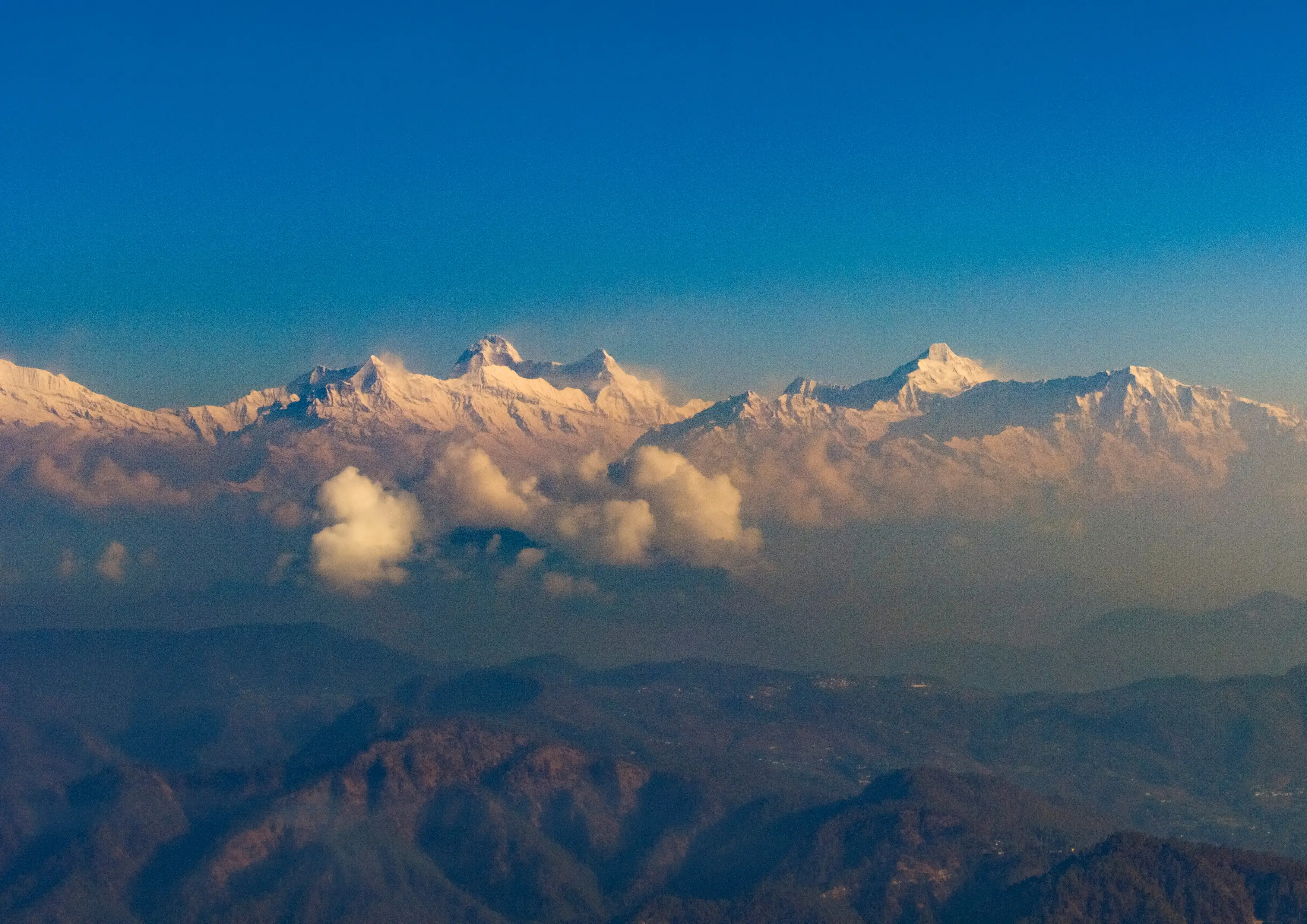
The five prominent peaks of Panchachuli create one of the most recognisable mountain panoramas in the Kumaon region.
For travellers exploring Chaukori and Kumaon, the story behind Panchachuli adds cultural depth to the spectacular Himalayan scenery.
Trishul Peak and the Sacred Symbolism of Shiva
The Trishul mountain peaks of Uttarakhand are named after the traditional trident associated with Lord Shiva.
The distinctive shape of Trishul Peak resembles the three-pronged trident, giving the mountain its powerful connection with Hindu symbolism.
The Trishul Peak legend is therefore closely connected with the spiritual symbolism of Shiva and the sacred character traditionally associated with the Himalayas.
The Trishul peaks of Kumaon are especially striking when viewed from different Himalayan destinations and viewpoints across Uttarakhand.
For travellers interested in sacred Himalayan mountains, Trishul represents the way natural landscapes and religious symbolism come together in mountain culture.
The connection between Lord Shiva and the Himalayas appears throughout Uttarakhand, where mountains, caves, rivers, and temples are frequently associated with ancient spiritual traditions.
Nanda Kot and the Sacred Himalayan Landscape
The Nanda Kot mountain is another important peak associated with the wider cultural and spiritual traditions of Kumaon.
The name Nanda Kot is connected with Nanda, the revered goddess of the Kumaon Himalayas.
The Nanda Kot legends form part of the broader tradition in which mountains are viewed not simply as geographical formations but as sacred spaces connected with divine figures.
The dramatic landscape around Nanda Kot also demonstrates why the Kumaon Himalayas have remained important to local communities for generations.
For travellers exploring Kumaon mountain destinations, the story of Nanda Kot provides another example of the connection between Himalayan geography and local belief systems.
Adi Kailash and the Sacred Himalayan Tradition
The Adi Kailash region of Kumaon holds a particularly important place in the spiritual geography of Uttarakhand.
The Adi Kailash mountain is traditionally associated with Lord Shiva and is considered a sacred destination by Hindu pilgrims.
The Adi Kailash legends are connected with the wider belief that the Himalayas are a sacred realm associated with Shiva, meditation, spirituality, and divine presence.
The journey towards Adi Kailash in Kumaon is therefore not simply a mountain journey but also a pilgrimage experience for many visitors.
The sacred mountains of Kumaon show how Himalayan travel can combine natural beauty, cultural heritage, mythology, and spirituality.
Mount Kailash and the Wider Himalayan Connection
Although Mount Kailash is located in Tibet rather than Kumaon, its importance helps explain the wider spiritual geography of the Himalayas.
The Mount Kailash mythology is deeply associated with Lord Shiva and has influenced the religious imagination surrounding Himalayan landscapes.
The Kumaon Himalayas and Mount Kailash traditions are connected through the broader cultural idea of the Himalayas as a sacred landscape.
Ancient Himalayan pilgrimage routes, spiritual traditions, and local legends have contributed to the belief that many mountain regions carry a sacred presence.
For visitors exploring Chaukori and Jhaltola, understanding this broader Himalayan tradition can make the surrounding mountain landscapes feel even more meaningful.
The Himalayas in the Mahabharata Legends
The Mahabharata and Kumaon Himalayas are connected through numerous local traditions and legends that have survived in Himalayan communities.
The Pandava legends of Kumaon are associated with several places, caves, temples, peaks, and landscapes throughout Uttarakhand.
The Panchachuli peaks are among the best-known examples of mountain landscapes connected with the Pandava tradition.
The Patal Bhuvaneshwar legends also form part of the rich mythological landscape of Kumaon, where caves and sacred spaces are associated with Hindu mythology and religious traditions.
For travellers exploring Kumaon tourism, these stories provide an opportunity to understand the cultural heritage behind the region's famous natural attractions.
Patal Bhuvaneshwar and the Ancient Cave Tradition
The Patal Bhuvaneshwar cave temple is one of the most fascinating sacred places to explore near the wider Chaukori region.
The Patal Bhuvaneshwar mythology describes the cave as a spiritually significant underground space associated with several Hindu deities and legends.
The natural formations inside the Patal Bhuvaneshwar cave have contributed to the area's reputation as a mysterious and sacred destination.
The ancient legends of Patal Bhuvaneshwar continue to attract pilgrims and travellers interested in mythology, spirituality, and the unusual natural landscapes of Kumaon.
For travellers staying at Misty Mountain Jhaltola, a visit to Patal Bhuvaneshwar can add a cultural and spiritual experience to a Kumaon itinerary.
Why Are Kumaon Mountains Considered Sacred?
The sacred mountains of Kumaon are important because Himalayan communities have traditionally viewed nature, rivers, forests, caves, and peaks as part of a larger spiritual landscape.
The Kumaon mountain legends have been preserved through oral traditions, festivals, religious practices, local temples, and stories shared across generations.
The spiritual heritage of Kumaon is therefore not limited to one temple or one mountain peak.
Instead, it exists across villages, forests, pilgrimage routes, sacred caves, mountain passes, and Himalayan peaks.
The ancient Himalayan legends of Kumaon demonstrate how closely nature and culture are connected in the region.
Experience the Legends Around Chaukori and Jhaltola
A trip to Chaukori and Jhaltola can be more than a scenic mountain holiday when travellers take time to understand the stories behind the surrounding Himalayas.
Staying at Misty Mountain Jhaltola, Chaukori gives travellers an opportunity to explore the Kumaon landscape while learning about the cultural traditions associated with the region.
The Chaukori Himalayas offer beautiful mountain views, while nearby temples, villages, caves, and traditional stories reveal the deeper heritage of Kumaon.
A Jhaltola mountain experience can therefore combine nature, local culture, mythology, photography, and peaceful time in the hills.
For families visiting Kumaon, these stories can make the journey educational and memorable.
For couples exploring Chaukori, the sacred mountain landscape offers a different way to experience the Himalayas.
For friends travelling through Jhaltola, discovering the legends behind the peaks can turn a scenic road trip into a cultural journey.
Ancient Legends That Still Live in the Mountains
The ancient legends of Kumaon continue to survive because they are part of the region's living cultural heritage.
The sacred peaks of Uttarakhand are not simply destinations marked on a map because their stories remain connected with local communities, traditions, temples, festivals, and pilgrimage routes.
The Kumaon Himalayas therefore offer travellers two different experiences at the same time, the beauty of the mountains and the stories that give those mountains cultural meaning.
From Nanda Devi and Nanda Kot to Panchachuli and Trishul, every famous peak carries its own history, symbolism, or local tradition.
From Patal Bhuvaneshwar to the sacred Himalayan routes of Adi Kailash, Kumaon reveals a landscape where mythology and nature exist side by side.
Discover the Sacred Side of Kumaon
Exploring the sacred mountain peaks of Kumaon offers a different perspective on Himalayan travel.
The mountains around Chaukori and Jhaltola are not only beautiful viewpoints but also part of a cultural landscape shaped by ancient legends, mythology, local traditions, and spiritual beliefs.
A stay at Misty Mountain Jhaltola, Chaukori can become the starting point for discovering this fascinating side of Kumaon.
Take time to look beyond the mountain views, explore the stories, understand the traditions, and discover why the Kumaon Himalayas have been revered for generations.
Come to Jhaltola, experience the Himalayas, and discover the ancient stories that live behind the sacred peaks of Kumaon.