
The Journey to Jhaltola: Why the Road is as Beautiful as the Destination
In our fast-paced urban lives, travel is often reduced to a logistical chore. We book flights, rush through crowded transit centers, and speed down monotonous expressways with one specific goal: to end the transit as quickly as possible. This aggressive focus on the final destination turns travel into an extension of our daily task lists, keeping the brain locked in a high-intensity, goal-oriented loop. When your mind is running on high-stress corporate timelines or performance marketing metrics, rushing to a vacation destination fails to provide real recovery.
Deep within the peaceful, winding corridors of the Kumaon Himalayas, the travel philosophy changes entirely.
The physical journey to Misty Mountains Jhaltola is not just an arbitrary route on a map; it is a vital part of your mental restoration. Moving steadily from the hot lowlands up through ancient pine forests, deep river valleys, and historic stone villages, this road serves as a slow, rhythmic decompression chamber. It challenges the modern need for speed, resets your sensory inputs, and prepares you for the absolute isolation of our private forest sanctuary.
Here is an analytical look at the road to Jhaltola, showing why the journey itself is just as beautiful, therapeutic, and necessary as the destination.
1. The Great Geographic Transition: Leaving the Plains Behind
The drive to Jhaltola provides an unforgettable lesson in natural geography. Whether you begin your mountain journey from the Kathgodam railway station or the Pantnagar airport, your route starts at the absolute edge of the flat Indo-Gangetic plains. Within just a few hours, the world shifts completely.
As your vehicle climbs past Kathgodam and navigates the initial switchbacks toward the lake district of Bhimtal, you cross a significant geographic line into the Lower Himalayas:
-
The Atmospheric Reset: With every few hundred feet of altitude you gain, the heavy, humid air of the plains drops away. Opening the windows allows cool, oxygen-rich mountain air to fill the vehicle, immediately breaking the pattern of air-conditioned city life.
-
The Changing Forest Canopy: The dry scrub and dense sal forests of the foothills slowly disappear, giving way to sweeping hillsides of Chir Pine. These long-needled trees line the roads for miles, casting long shadows across the asphalt and scenting the mountain air with clean, sharp pine resin.
-
The Opening of Scale: The mountain roads trace the natural contours of the ridges, revealing sudden views of deep, green river valleys and ancient terraced farm fields thousands of feet below. This instant change in scale helps ease mental fatigue, reminding you of a world far larger than standard digital displays.
2. Moving Through the Cultural Heart of Kumaon
The route to Jhaltola takes you directly through the historic heart of the Kumaon region. Instead of bypassing local life on a sterile, uniform highway, you travel at a pace that lets you observe the authentic, slow rhythms of mountain culture.
Your route winds past several living cultural landmarks:
-
Almora’s Heritage Ridges: Passing near the historic town of Almora, you can spot traditional stone architecture, intricately carved wooden facades, and vibrant local markets that have operated for generations without changing their layout.
-
The Sacred Confluences: Descending into the valley of Bageshwar, the road crosses the meeting point of the Saryu and Gomti rivers. The sound of fast-moving water and the sight of ancient stone temples along the riverbanks provide a grounded, serene travel experience.
-
The Agricultural Terraces: Moving past Bageshwar towards the higher ridge lines, the landscape opens up into wide agricultural terraces. Here, local villagers work the soil by hand, growing traditional mountain crops like finger millet (Madua), seasonal herbs, and fresh vegetables.
3. The Chaukori Crest: The First Peak Reveal
The dramatic highlight of the main road journey happens as your vehicle arrives at the high crest of Chaukori. After hours of navigating deep valleys and winding pine-covered ridges, the horizon suddenly clears to reveal a magnificent mountain panorama.
On a clear day, the great inner range of the Greater Himalayas stands directly before you like an unbroken wall of snow and ice:
-
The Panchachuli Peaks: The five distinct, sharp summits of the Panchachuli range stand out in bold relief against the sky, looking remarkably close.
-
The Nanda Devi Sentinel: The massive, twin-peaked summit of Nanda Devi rises high above the surrounding mountain ridges, anchoring the entire horizon with its silent presence.
-
A Shock of Mental Clarity: Arriving at this high-altitude viewing point delivers an instant sense of awe. The hours of driving pay off immediately, replacing long-term digital strain with a clear, calm perspective.
This dramatic view prepares you perfectly for the unshared wilderness that lies just ahead. To see why this protected, high-altitude environment is considered a vital escape for true nature lovers, Read More: Why Jhaltola is the Hidden Himalayan Escape Every Nature Lover Should Experience.
4. The Final Four Kilometers: The Off-Road Decompression
The final section of the journey is what sets Misty Mountains Jhaltola completely apart from conventional hill station hotels. As you leave the main state highway near the quiet settlement of Raiagar, the asphalt ends, and the estate’s private forest road begins.
This last 4-kilometer stretch cannot be traveled by standard city vehicles. Guests step out of their cars and transfer into the estate’s specialized 4x4 vehicles to begin a slow, intentional ascent into the heart of the wilderness.
This off-road drive provides the final transition into total quiet:
-
Dropping the Noise: As the main highway fades from view, the last sounds of vehicle horns, modern commerce, and tourist traffic vanish completely.
-
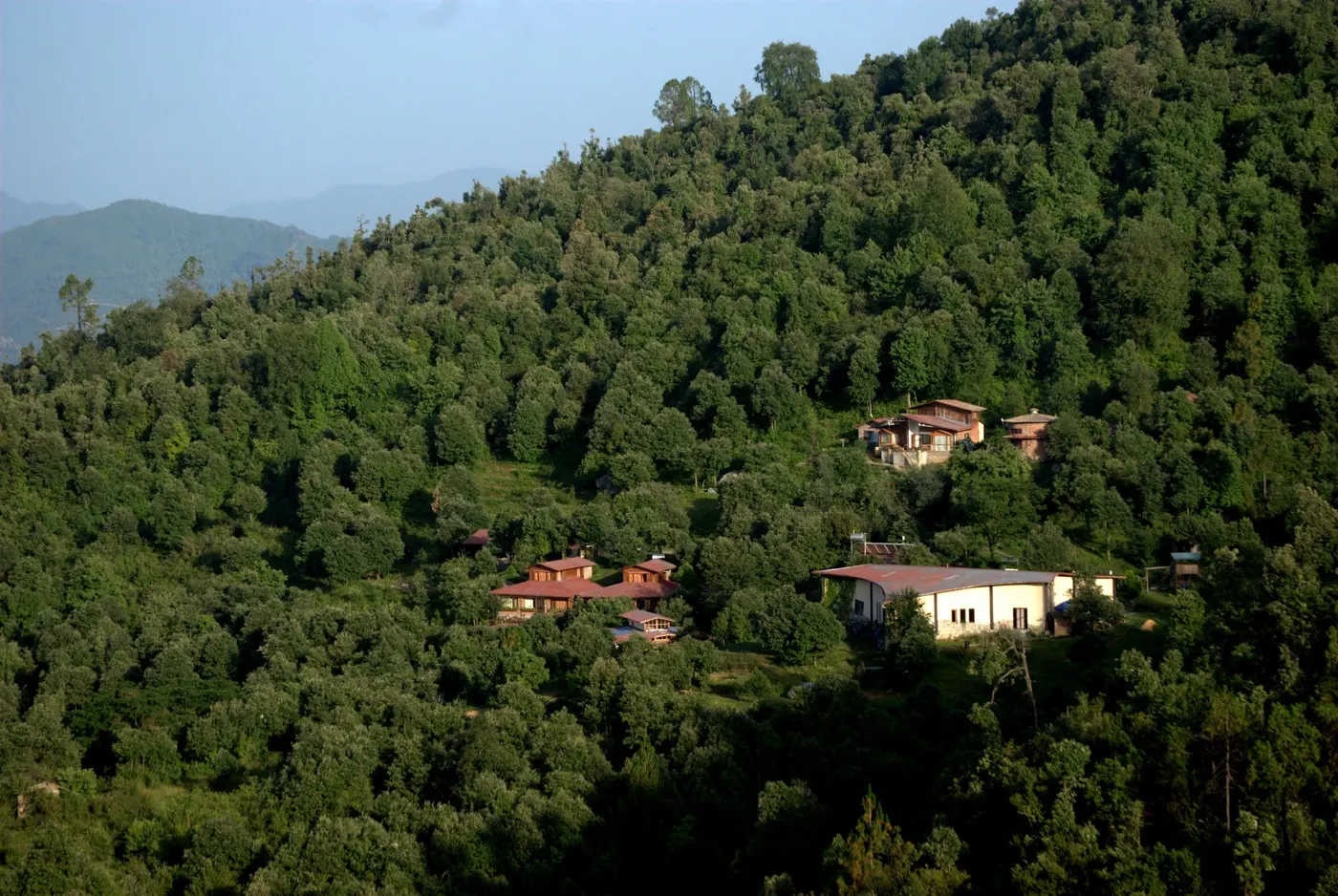
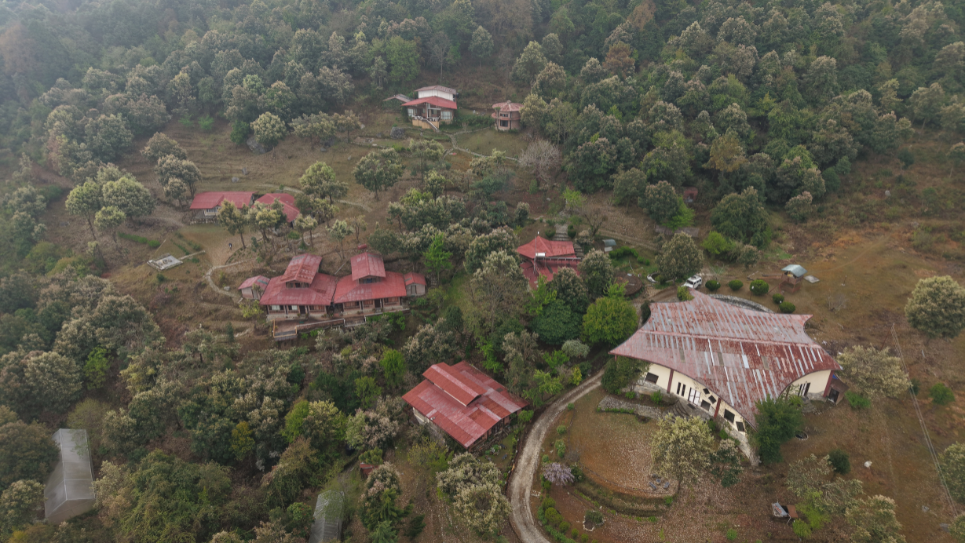
Entering the Old-Growth Oak Sanctuary: The 4x4 climbs slowly beneath a thick canopy of ancient Himalayan Oak (Banj) and large Rhododendron trees, moving deep into a protected 1,000-acre private estate.
-
Embracing a Mindful Cadence: The unpaved forest track forces you to move at a slow, deliberate pace. This unhurried movement gives your mind the time to notice the small details of the forest floor—rich green moss growing on wet bark, delicate wild ferns, and the sudden flight of a native hill bird through the trees.
This focus on keeping the wilderness hidden and off-grid is a core part of our history. The estate was built to safeguard this pure natural space, ensuring that our guests can step out of the frantic modern loop and into an ecosystem that remains completely undisturbed by mainstream commercial tourism. Read Our Full History: Our Story.
Conclusion: The Ultimate Reward of Slow Travel
When you finally step out of the 4x4 vehicle at the main mountain pavilion of Misty Mountains Jhaltola, you will realize that your mental state has shifted completely since you started your trip. The long, beautiful road has done its work, slowing down your rapid internal pace and smoothing away urban tension.
By viewing the journey as a core part of your vacation rather than an obstacle to rush through, you arrive at our sanctuary fully prepared to enjoy the silence, breathe the clean mountain air, and reconnect with the wild earth. The road to Jhaltola is not just a way to reach a destination; it is where your recovery begins.
🔴 START YOUR SCENIC HIMALAYAN JOURNEY
Ready to escape the predictable, high-traffic commercial highways and experience a travel route that restores your mental clarity? Contact our travel curators today to map out your journey, organize your secure 4x4 forest transfer, and reserve your private cottage within our 1,000-acre private sanctuary.
-
Call / WhatsApp: +91 99270 39123
-
Sanctuary Address: Jhaltola, Near Raiagar, Pithoragarh District, Uttarakhand, India
-
Plan Your Stay: Get in touch with our team directly to review personalised multi-day itineraries, custom route maps, and seasonal availability for your Himalayan retreat.