Deep in the Kumaon Himalayas, near Gangolihat in Pithoragarh district, lies Patal Bhuvaneshwar, a sacred cave temple of Uttarakhand associated with Lord Shiva and centuries of Himalayan religious tradition.
For travellers staying at Misty Mountain in Chaukori, a visit to Patal Bhuvaneshwar offers an opportunity to experience one of the region's most distinctive spiritual and geological places.
The Patal Bhuvaneshwar cave is located in Bhubneshwar village, around 14 kilometres from Gangolihat and approximately 36 to 38 kilometres from Chaukori, making it a practical day excursion from the Chaukori region.
Patal Bhuvaneshwar is not a conventional temple built around a large architectural structure because the principal shrine exists inside a natural limestone cave.
The Patal Bhuvaneshwar cave descends below the Himalayan surface through a narrow passage before opening into chambers where naturally formed limestone structures have become part of local worship and religious interpretation.
This is what makes Patal Bhuvaneshwar different from many famous temples in Uttarakhand, because the landscape itself forms an important part of the religious experience.
Where Is Patal Bhuvaneshwar?
Patal Bhuvaneshwar is situated in Bhubneshwar village in Pithoragarh district, Uttarakhand, at an elevation of approximately 1,350 metres above sea level.
The Patal Bhuvaneshwar temple is around 14 kilometres from Gangolihat, while the road distance from Chaukori is generally reported at around 36 to 38 kilometres.
For visitors staying in Chaukori, the journey to Patal Bhuvaneshwar passes through the landscape of Kumaon, connecting the Himalayan holiday experience of Chaukori with an important spiritual site of Pithoragarh.
A Patal Bhuvaneshwar visit can therefore become part of a wider Kumaon itinerary that includes Chaukori, Gangolihat, Berinag and other cultural destinations.
The Story Begins Inside the Mountain
The most interesting part of Patal Bhuvaneshwar is that the temple is naturally located underground rather than standing on the surface.
The Patal Bhuvaneshwar cave is a limestone formation created over a long geological period through the action of water, and its interior contains stalactite and stalagmite formations.
For a visitor, the first impression of Patal Bhuvaneshwar is not of a conventional temple courtyard but of a passage leading into the earth.
The Patal Bhuvaneshwar cave becomes narrower as visitors enter, and chains are provided along sections of the route for support because the rock surface can be damp and slippery.
The physical experience of entering Patal Bhuvaneshwar is therefore an important part of understanding why the site has remained so memorable for generations of pilgrims.
What Do Local Traditions Say About Patal Bhuvaneshwar?
The story of Patal Bhuvaneshwar is closely connected with Hindu mythology and the religious traditions of Kumaon.
According to the traditional account associated with Patal Bhuvaneshwar, King Rituparna of the Surya dynasty discovered the cave during the Treta Yuga.
The story connects King Rituparna with King Nala, whose story is also found in the Mahabharata tradition.
According to the legend, Rituparna came into the Himalayan forest and eventually encountered the entrance to the mysterious cave.
The traditional story says that Sheshnag guided Rituparna through the underground world of Patal Bhuvaneshwar.
Inside the cave, the king is believed to have witnessed divine manifestations and the presence of numerous deities.
It is important to understand that this is a religious tradition rather than a historically verified event, but the story remains an important part of how devotees understand Patal Bhuvaneshwar.
The Connection With Lord Shiva
Patal Bhuvaneshwar is primarily associated with Lord Shiva, and the cave's natural formations are interpreted by devotees through the language of Hindu mythology.
The Patal Bhuvaneshwar shrine contains naturally formed rock structures that believers associate with different deities and mythological figures.
Among the formations described in accounts of the cave are representations associated with Shiva, Sheshnag, Ganesha and other figures from Hindu tradition.
The significance of Patal Bhuvaneshwar comes not simply from seeing these formations but from understanding how generations of devotees have interpreted the natural landscape through faith.
That combination of natural geology and religious belief is one of the defining characteristics of Patal Bhuvaneshwar.
What the Skanda Purana Says
Patal Bhuvaneshwar is also associated with the Manas Khand section of the Skanda Purana.
Traditional accounts describe the sacred cave in connection with the Himalayan religious landscape and the presence of divine power.
The reference to Patal Bhuvaneshwar in the religious tradition gives the site a significance that extends beyond the modern tourism map of Uttarakhand.
For pilgrims visiting Patal Bhuvaneshwar, the cave is therefore not simply a geological attraction but a sacred place that forms part of Kumaon's older spiritual geography.
The Story of Adi Shankaracharya
Another important tradition connected with Patal Bhuvaneshwar concerns Adi Shankaracharya.
Local and pilgrimage traditions associate Adi Shankaracharya with the rediscovery or revival of worship at Patal Bhuvaneshwar during the Kali Yuga.
Some commonly published accounts give a date of 1191 AD for his visit, although historical dating around the Shankaracharya tradition varies across sources.
For an authentic Patal Bhuvaneshwar story, it is therefore better to describe the association as a long-standing religious tradition rather than present one specific date as an uncontested historical fact.
The continuing worship at Patal Bhuvaneshwar is one reason the cave remains important to local communities and pilgrims.
The Bhandari Priests and the Living Tradition
One of the most meaningful parts of the Patal Bhuvaneshwar story is the role of local priest families.
Several accounts describe the Bhandari family as having served as priests at Patal Bhuvaneshwar across many generations.
This is where the history of Patal Bhuvaneshwar becomes more personal.
A temple is not preserved only through stone, architecture or written records.
A temple like Patal Bhuvaneshwar also survives through the people who maintain rituals, guide visitors, explain traditions and pass stories from one generation to another.
The local priest tradition at Patal Bhuvaneshwar is therefore an important part of the living heritage of Kumaon.
What Local People Say About the Cave
When people from the Kumaon region speak about Patal Bhuvaneshwar, the conversation is generally connected with faith, tradition and the experience of entering the cave.
Local belief surrounding Patal Bhuvaneshwar places great importance on the natural formations inside the cave and the idea that the underground chambers represent elements of the divine world.
Many local traditions describe Patal Bhuvaneshwar as a place where numerous deities are believed to be present symbolically.
The popular expression about “33 crore gods” is often repeated in discussions about Patal Bhuvaneshwar, although the Sanskrit term koti can mean a category or type, so the phrase should not automatically be understood as literally meaning 330 million separate deities.
For local devotees, however, the larger meaning is more important than the number.
Patal Bhuvaneshwar represents a sacred space where different aspects of Hindu belief are understood to exist within one natural cave.
Why the Cave Feels Different From an Ordinary Temple
The experience of Patal Bhuvaneshwar begins before reaching the shrine itself.
The road through Kumaon brings visitors into a quieter Himalayan landscape before the final walk towards the cave entrance.
At Patal Bhuvaneshwar, visitors then move from open mountain air into an underground environment where the temperature, light and sound change naturally.
The cave is illuminated for visitors, but parts of the journey remain enclosed and narrow, creating an experience very different from visiting an open-air temple.
The chains along the route are there to help visitors move safely through sections of the cave.
The wet limestone surfaces also remind visitors that Patal Bhuvaneshwar is a natural cave before it is a tourist attraction.
The Geological Side of Patal Bhuvaneshwar
There is another story inside Patal Bhuvaneshwar, and that story belongs to geology.
The Patal Bhuvaneshwar cave is formed from limestone, and water has played an important role in creating the formations visible inside it.
Stalactites form downward from cave ceilings, while stalagmites grow upward from cave floors as mineral-rich water deposits material over long periods.
At Patal Bhuvaneshwar, some of these natural formations have been interpreted through Hindu religious traditions as forms representing gods, animals and mythological figures.
This does not mean the rocks were literally carved into those figures.
Rather, the shapes formed naturally and were understood by devotees through the religious stories familiar to the community.
That distinction makes the story of Patal Bhuvaneshwar even more interesting because geology and belief exist side by side.
The Four Doors of Patal Bhuvaneshwar
One of the most widely repeated stories about Patal Bhuvaneshwar concerns four symbolic doors associated with the cave.
These are traditionally described as Randwar, Paapdwar, Dharmdwar and Mokshdwar.
Different accounts describe these gateways through mythological interpretations connected with major events from Hindu tradition.
Some traditions say that certain gateways became inaccessible after events associated with Ravana and the Mahabharata war.
These stories belong to the religious folklore of Patal Bhuvaneshwar and should be understood as traditional beliefs rather than archaeological findings.
For visitors, the four-door story adds another layer to the cultural significance of the cave.
Why Patal Bhuvaneshwar Matters to Kumaon
Patal Bhuvaneshwar is important because it represents more than one attraction.
It brings together the natural landscape of Pithoragarh, the spiritual traditions of Kumaon, the work of local priest families and the geological history of a limestone cave.
The Patal Bhuvaneshwar temple also forms part of the larger pilgrimage landscape around Gangolihat.
Nearby Gangolihat is known for Haat Kalika Temple, another important religious destination in the region.
This makes the Patal Bhuvaneshwar and Gangolihat circuit particularly meaningful for travellers interested in the religious heritage of Kumaon.
Patal Bhuvaneshwar From Chaukori
For travellers staying in Chaukori, Patal Bhuvaneshwar can be included as a day excursion.
The Patal Bhuvaneshwar cave is roughly 36 to 38 kilometres from Chaukori by road, with travel time depending on road conditions and the route taken.
Staying in Chaukori also gives travellers the opportunity to experience a different side of Kumaon before or after visiting the cave.
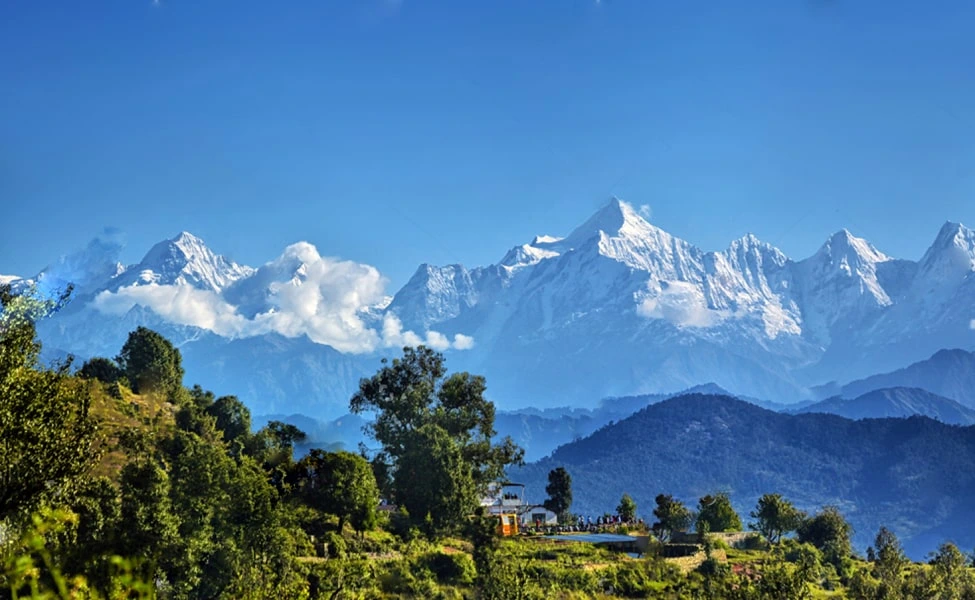
Chaukori is known for Himalayan mountain views, quiet surroundings and its slower pace, while Patal Bhuvaneshwar offers a deeper connection with the spiritual and geological heritage of the region.
For guests at Misty Mountain, the journey to Patal Bhuvaneshwar can therefore become part of a larger Kumaon experience rather than a rushed temple visit.
A Morning Journey From Misty Mountain
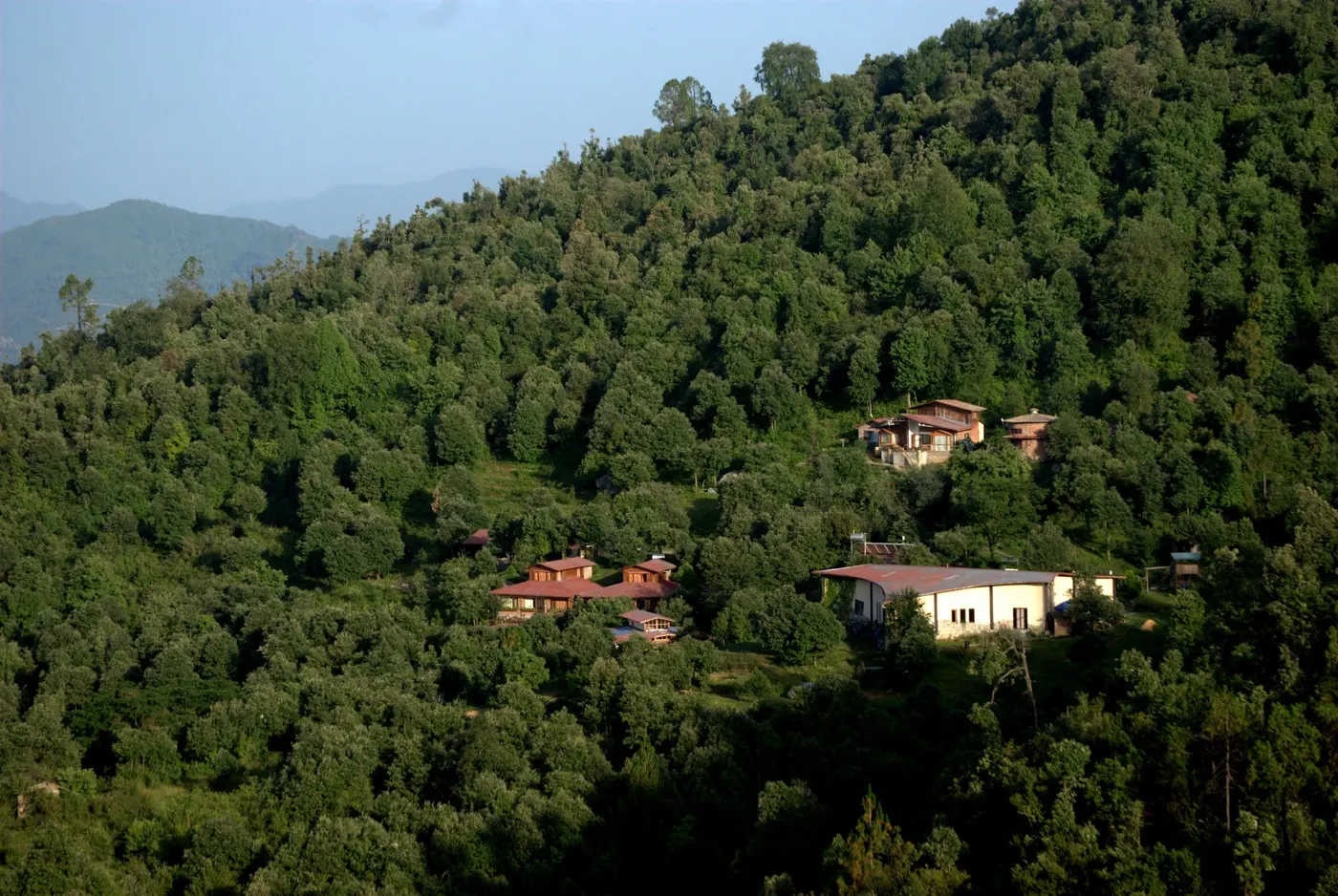
Imagine beginning your morning at Misty Mountain in the quiet landscape of Chaukori.
A simple breakfast at Misty Mountain can be followed by a road journey through the Kumaon hills towards Patal Bhuvaneshwar.
As the route moves towards Gangolihat and Bhubneshwar village, the experience gradually changes from a Himalayan holiday landscape to a pilgrimage landscape.
The Patal Bhuvaneshwar visit then becomes the central experience of the day.
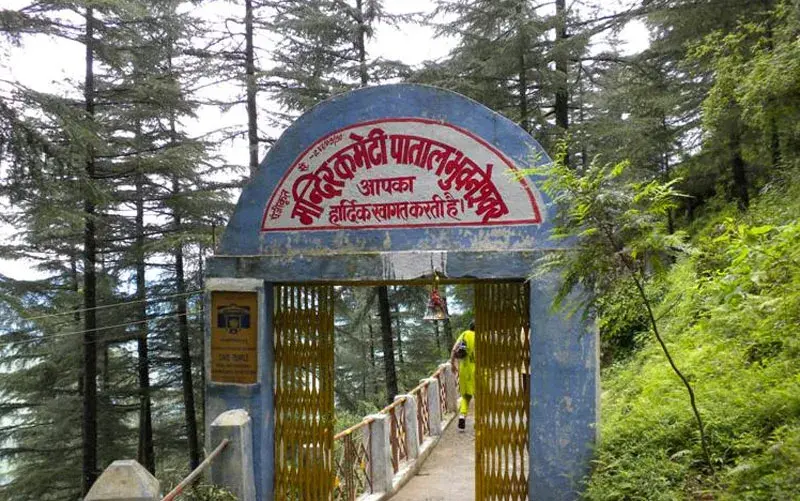
After reaching the temple area, visitors walk towards the cave entrance and prepare for the descent.
The transition from daylight into the Patal Bhuvaneshwar cave is simple but memorable because the atmosphere changes naturally as the passage moves underground.
What You See Inside Patal Bhuvaneshwar
Inside Patal Bhuvaneshwar, the visitor encounters natural limestone formations, narrow passages and chambers.
Water continues to shape the cave environment, and the formations have been interpreted through religious traditions over generations.
The cave is often described as a series of caves within caves, which is one reason Patal Bhuvaneshwar has such a distinctive character.
Rather than seeing one large underground chamber, visitors move through connected spaces where the shape of the rock changes continuously.
For a traveller interested in nature, Patal Bhuvaneshwar provides an opportunity to observe limestone cave formations.
For a pilgrim, the same formations carry religious meaning.
Both perspectives can exist without needing to contradict each other.
A Story Passed From One Generation to Another
Perhaps the most important part of Patal Bhuvaneshwar is not any single legend.
It is the fact that the stories have continued to be carried by people in the region.
A child growing up around Gangolihat may hear about Patal Bhuvaneshwar from parents or grandparents.
A priest may explain the religious meaning of a particular formation to visitors.
A local guide may describe the route through the cave and the stories connected with its chambers.
This is how places such as Patal Bhuvaneshwar remain alive in local culture.
The stories are not simply information printed on a tourism board.
They are part of the oral tradition of Kumaon.
What Makes the Patal Bhuvaneshwar Story Authentic?
An authentic Patal Bhuvaneshwar story does not need exaggerated claims.
The cave itself is remarkable enough.
There is a real limestone cave, a real pilgrimage tradition, real local priests, real geological formations and a documented association with the religious literature of the region.
The legends add cultural meaning to this physical landscape.
The local people who continue to maintain and visit the shrine give those traditions a living context.
That is why Patal Bhuvaneshwar is best understood through both faith and observation.
Patal Bhuvaneshwar and Responsible Travel
Visitors to Patal Bhuvaneshwar should remember that this is a functioning religious site and a fragile natural cave.
The limestone formations inside Patal Bhuvaneshwar have developed over very long periods and should not be touched or damaged.
Visitors should follow instructions from temple authorities and local guides during the cave visit.
Photography restrictions may apply inside the cave, so travellers should respect the current rules rather than treating Patal Bhuvaneshwar like an ordinary sightseeing attraction.
Responsible travel is particularly important in a place where religious worship and natural heritage exist together.
Best Time to Visit Patal Bhuvaneshwar
The most comfortable period for a Patal Bhuvaneshwar trip is generally during the drier months, particularly spring and the post-monsoon period.
September to November can offer pleasant conditions for combining Patal Bhuvaneshwar with a Chaukori holiday, although travellers should always check current road and weather conditions before departure.
The monsoon season requires additional caution because mountain roads can become slippery and rainfall can affect travel conditions.
The cave itself can also remain damp, so visitors should wear footwear with a good grip.
What to Carry for a Patal Bhuvaneshwar Visit
Comfortable footwear is useful for visiting Patal Bhuvaneshwar because the cave route includes steps and uneven surfaces.
A light jacket can also be useful because the underground environment can feel cool compared with the outside temperature.
Visitors should carry drinking water for the road journey and keep enough time for the return trip to Chaukori.
Most importantly, travellers should enter Patal Bhuvaneshwar with patience because the cave is a religious site rather than a place to rush through for photographs.
A Different Kind of Kumaon Experience
Many travellers come to Kumaon looking for Himalayan views, quiet forests and peaceful mountain stays.
Patal Bhuvaneshwar offers a different kind of Kumaon experience because its beauty exists below the surface.
At Misty Mountain, guests can experience the open Himalayan landscape of Chaukori and then travel to Patal Bhuvaneshwar to experience one of the region's most distinctive underground shrines.
The contrast is what makes the journey meaningful.
One day can begin with mountain light in Chaukori and continue into the natural darkness of Patal Bhuvaneshwar.
The experience connects two sides of Kumaon, the visible Himalayas and the hidden spiritual landscape beneath them.
Why Visit Patal Bhuvaneshwar From Misty Mountain?
For guests staying at Misty Mountain, Patal Bhuvaneshwar is an interesting addition to a Kumaon itinerary because the cave is within practical driving distance of Chaukori.
The approximately 36 to 38 kilometre journey from Chaukori makes Patal Bhuvaneshwar suitable for travellers who want to explore beyond the usual Himalayan viewpoints.
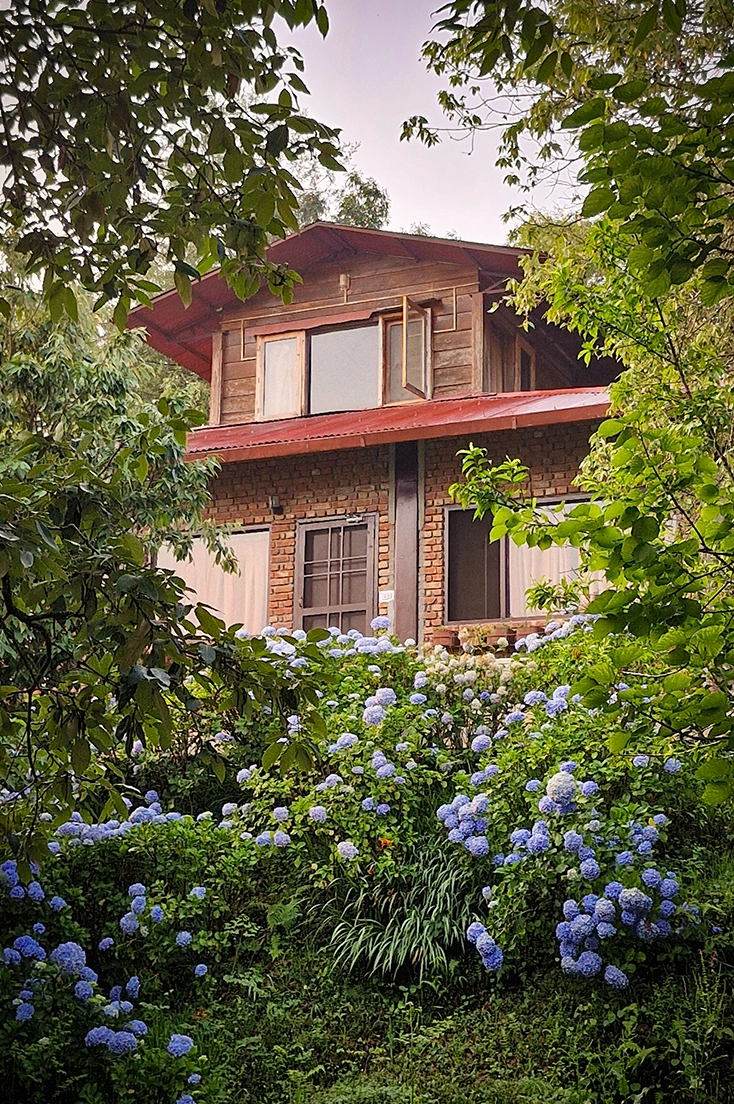
A stay at Misty Mountain can provide the slower, quieter side of the trip, while a Patal Bhuvaneshwar excursion adds culture, history, mythology and geology.
Together, these experiences create a more complete understanding of Kumaon.
The Story That Remains
Patal Bhuvaneshwar does not need to be presented as a place of exaggerated mystery.
Its story is already strong enough.
It is a natural limestone cave in the Kumaon Himalayas, a functioning shrine associated with Lord Shiva, a place connected with centuries of religious tradition and a site where local communities continue to preserve stories and rituals.
The legends of King Rituparna, Sheshnag, the deities, the four doors and Adi Shankaracharya belong to the religious memory of the place.
The limestone formations belong to the geological history of the mountain.
The priests, guides, pilgrims and local families belong to its living present.
And that is perhaps the most honest way to understand Patal Bhuvaneshwar.
It is not only a temple.
It is not only a cave.
It is not only a geological formation.
Patal Bhuvaneshwar is a place where Kumaon's landscape, faith, oral traditions and natural history have existed together for generations.
For travellers staying at Misty Mountain in Chaukori, a journey to Patal Bhuvaneshwar offers the chance to experience that story directly.
And when the journey is over and you return to the open Himalayan landscape of Chaukori, the contrast between the mountain sky above and the ancient cave below is likely to stay with you long after the visit.
Plan Your Patal Bhuvaneshwar Experience From Misty Mountain Chaukori,Jhaltola
If you are staying at Misty Mountain, Chaukori, Patal Bhuvaneshwar can be considered as part of a wider Kumaon travel itinerary covering Chaukori, Gangolihat, Berinag and nearby Himalayan destinations.
The Patal Bhuvaneshwar cave is approximately 36 to 38 kilometres from Chaukori, while Gangolihat is around 14 kilometres from the cave.
Before travelling, check the latest local conditions, temple access arrangements, weather and road status because mountain travel conditions can change.
The best way to experience Patal Bhuvaneshwar is with enough time to listen, observe and understand the traditions rather than simply checking the temple off a sightseeing list.
At Misty Mountain, the journey can begin with the quiet of Chaukori and continue into one of Kumaon's most distinctive sacred landscapes, Patal Bhuvaneshwar.